

Glossary
Conversations with Ramana Maharshi are rare and priceless. He seldom wrote anything on His own accord. But out of His immense kindness and love, sometimes He answered questions from Devotees on Meditation, Devotion to God and Life. Reading them, contemplating on them and try to practice them are bound to offer great guidance to every true seeker of Real Happiness.
Sometimes Sri Ramana Maharshi used words in Sanskrit or devotional words and scriptural texts. This Glossary provides some insight into those.
-
Mahavakya
A vakya is a Vedic utterance. Mahavakya means ‘great utterance’. Of all these, four are especially distinguished. "tattvamasi" (‘You are That’) is one of them. -
Maheswara
In a general sense, Maheswara means the Great God. In a particular sense, it means Lord Shiva.
-
Manomaya
Made up of mind; composed of mind. -
Mantra
Mantra is (originally in Hinduism) a word or sound repeated to aid concentration in meditation and purification of the mind. It is a word, statement or slogan repeated frequently. It can also be a Vedic hymn.
-
Mantrakshara
Mantrākṣara (मन्त्राक्षर) : Mantrakshara refers to the “syllables of mantras”, the letters (akara) of a sacred formula (mantra).
-
Marga
Path to follow.
-
Mauna
Silence, Mental Silence, Inner Tranquillity
~~~
-
Maya
~~~
The Great Illusion that projects the world and veils our Real Self. To remove this illusion and realize one's Blissful, Immortal Nature, Self-Enquiry in the manner of "Who am I ?" becomes essential and the most effective and direct means.
-
Mlechcha
Mleccha (from Vedic Sanskrit म्लेच्छ mleccha, meaning "barbarian"), also spelled Mlechchha or Maleccha, is a name, which was used by the ancient Indians to indicate the uncouth and incomprehensible speech of foreigners who were "impure and barbarian" people.
-
Moksha
Moksha: Derived from the Sanskrit root muc (to free), it specifically represents the end of suffering, the realization of one's true self, and union with the Divine or ultimate reality. It is considered the final goal of life.
Moksha and Mukti both refer to liberation, enlightenment, and freedom from the cycle of birth and death (samsara) in Indian religions. Both signify the end of bondage, the overcoming of ignorance (Maya), and the attainment of pure bliss. While often used interchangeably to mean "emancipation" or "release," they sometimes differ in emphasis: Mukti often refers to freedom from worldly attachments while alive (Jivan Mukti), while Moksha often signifies the final, ultimate liberation upon death.
-
Mukta
Liberated; Self Realized -
Mukti
Mukti: Means freedom or release. It often implies a state of being unburdened by material desires or karmic consequences while still in the physical body.
Moksha and Mukti both refer to liberation, enlightenment, and freedom from the cycle of birth and death (samsara) in Indian religions. Both signify the end of bondage, the overcoming of ignorance (Maya), and the attainment of pure bliss. While often used interchangeably to mean "emancipation" or "release," they sometimes differ in emphasis: Mukti often refers to freedom from worldly attachments while alive (Jivan Mukti), while Moksha often signifies the final, ultimate liberation upon death.
-
Murti
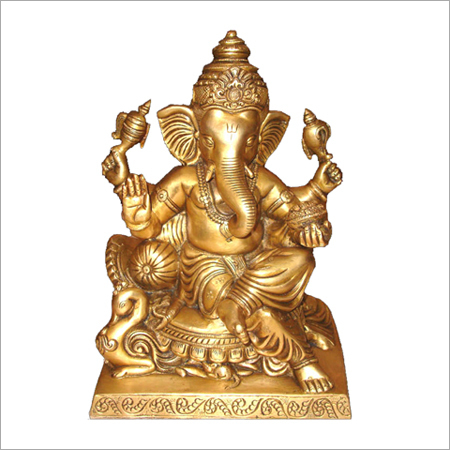
A Murti (Sanskrit: मूर्ति, IAST: Mūrti) literally means any form, embodiment or solid object, and typically refers to an image, statue or idol of a deity or person in Indian culture.
Ganesh Murti (Form of Lord Ganesha)
[glossary]

