Arunachala Puranam
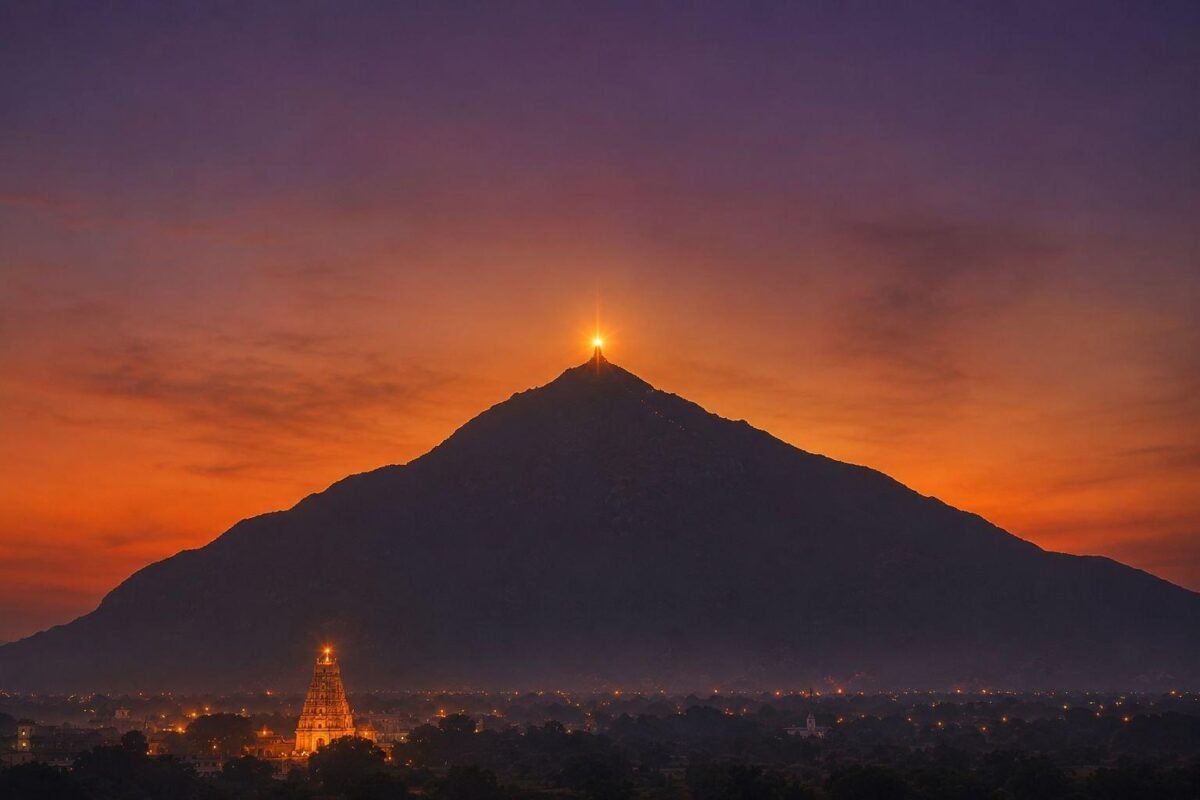
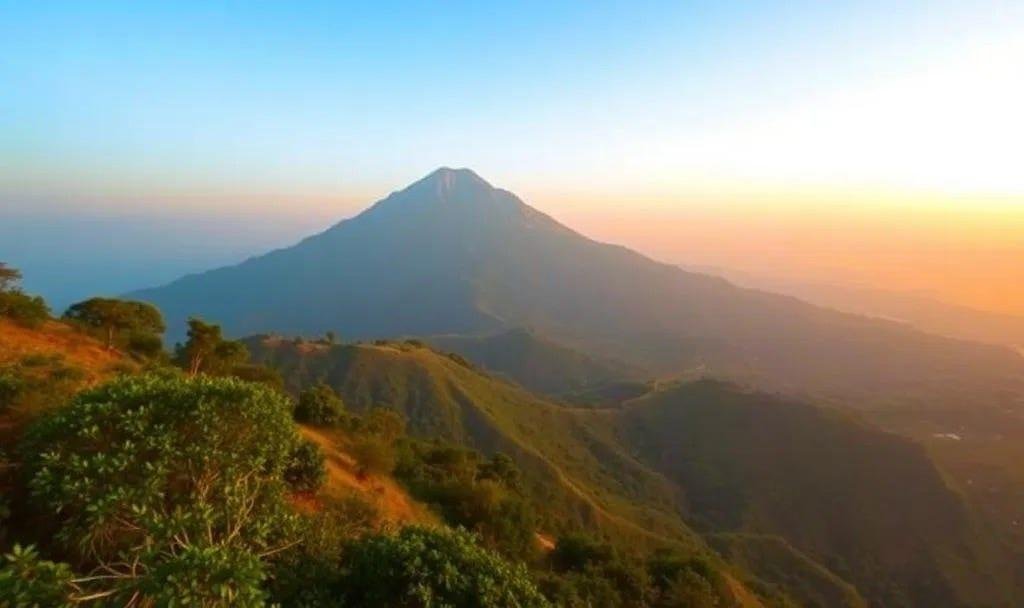
The Arunachala Puranam is a Tamil work that celebrates the spiritual greatness of Arunachala and recounts the sacred legends associated with the Hill and the holy town of Tiruvannamalai. It belongs to the traditional class of Hindu religious literature known as Sthala Puranas—accounts devoted to the glory, history, and divine significance of particular sacred places.
The work was composed by the Tamil Saiva poet Saiva Ellappa Navalar, generally dated to the seventeenth century. Drawing upon earlier Sanskrit Puranic traditions, particularly the accounts associated with the Arunachala Mahatmya, the poet presents these sacred stories in the beautiful and expressive medium of Tamil verse.
Although the Arunachala Puranam shares much of its subject matter with the Sanskrit accounts, it also contains additional episodes and narratives that enrich the traditional history of Arunachala.
A Sacred Account of Arunachala
The Arunachala Puranam is more than an account of the origin and history of a sacred place. Through its stories of divine manifestation, devotion, and grace, it conveys the profound spiritual importance of Arunachala as a holy form of Lord Siva. The Hill is not merely described as a place of pilgrimage, but as a manifestation of the Divine itself.
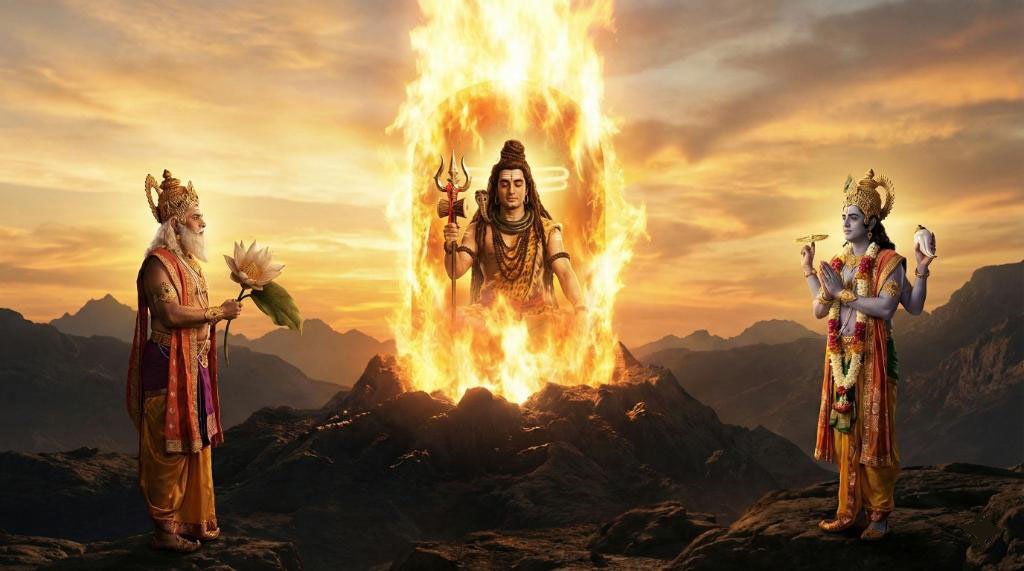
Among the central themes of the work is the manifestation of Siva as an immense column of fire, whose beginning and end could not be discovered by Brahma and Vishnu. This account reveals the limitless nature of the Supreme, which transcends the understanding of even the greatest of the gods. The manifestation of this infinite light as Arunachala gives the Hill its unique place in the sacred traditions of Shaivism.
The Puranam also celebrates the sanctity of Tiruvannamalai and the spiritual blessings associated with worshipping Arunachala, visiting its temple, and circumambulating the Hill. Its narratives have helped preserve and transmit the sacred traditions of Arunachala through generations, inspiring countless devotees to approach the Hill with reverence, faith, and devotion.
The Manifestation of Arunachala
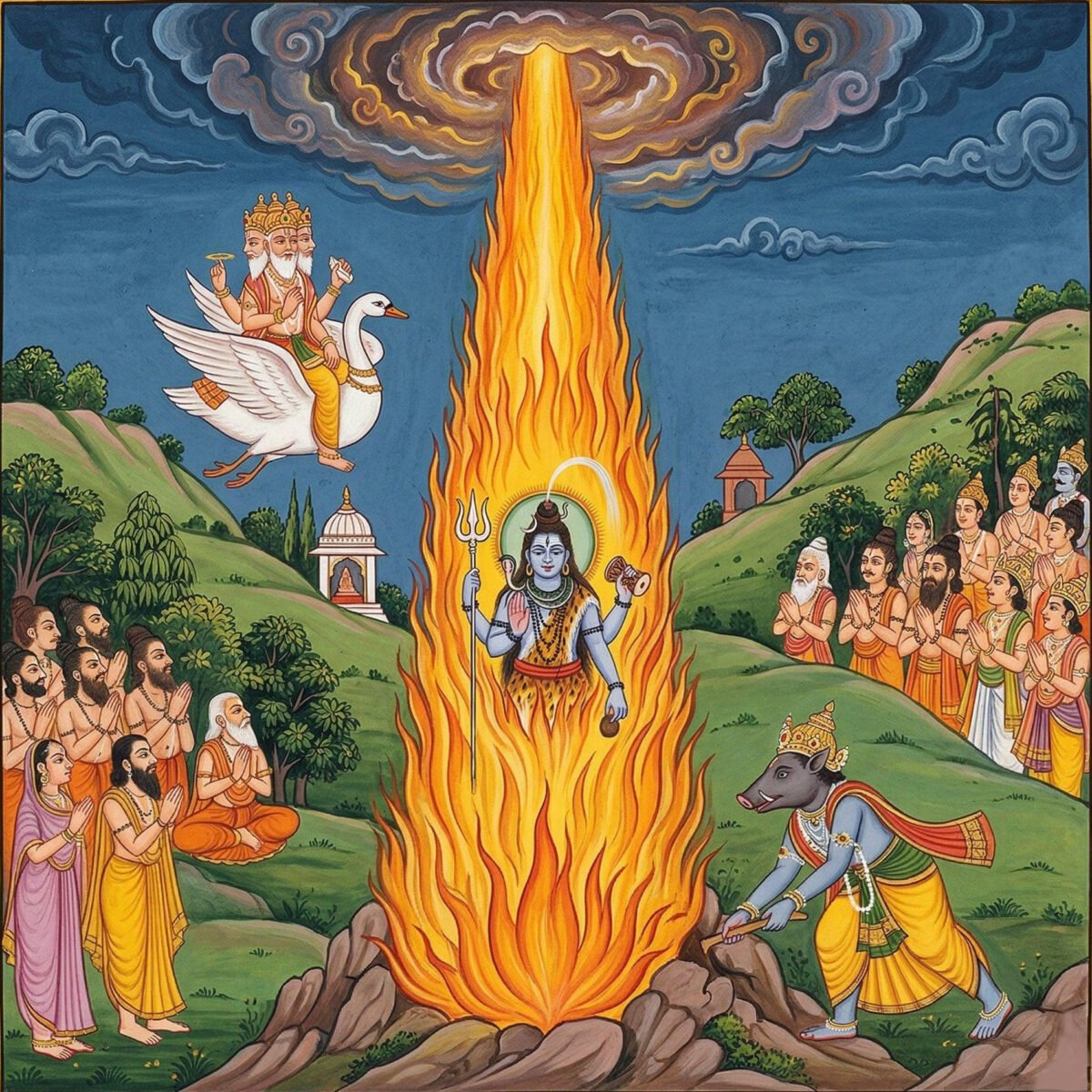
At the heart of the Puranic tradition is the revelation of Lord Siva as an infinite column of light. According to the sacred account, Brahma and Vishnu once sought to discover the limits of this divine manifestation. Brahma travelled upwards in search of its summit, while Vishnu descended to find its base. Neither could discover its beginning or end.
The infinite column revealed the immeasurable nature of Siva, beyond the comprehension of the gods themselves. In response to the prayers of the divine beings, Siva manifested as the sacred Hill of Arunachala, making his presence accessible to devotees. Thus, Arunachala is revered not merely as a mountain associated with Siva, but as Siva Himself in the form of the Hill.
In the traditional account, the appearance of the infinite column of fire brought an end to the dispute between Brahma and Vishnu over their supremacy. Their inability to discover its limits revealed that the Supreme Reality is beyond all distinctions, measurements, and intellectual understanding. The divine manifestation was a revelation of the limitless nature of Siva.
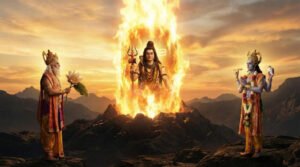
The fiery column, however, was not to remain forever in a form inaccessible to the world. Out of compassion for the gods and devotees, Siva assumed the form of Arunachala. The blazing light became the sacred Hill, allowing human beings to approach and worship the very Divine Reality that had appeared as an immeasurable column of fire.
This manifestation also gives Arunachala its special significance among the sacred places dedicated to Siva. While Siva is worshipped in temples in various forms, Arunachala is revered as the very form of the Lord Himself. The Hill is therefore regarded as a living symbol of divine presence, whose spiritual power is not dependent upon elaborate rituals or outward forms of worship.
The legend also conveys an important spiritual truth: the Supreme cannot be fully understood through the intellect or reached merely through external knowledge. Just as Brahma and Vishnu could not find the limits of the infinite light, the ultimate Reality lies beyond the grasp of the mind. Arunachala stands as a reminder of that boundless Reality, inviting devotees to turn inward and discover its presence within themselves.
The Divine Story of Parvati
One of the episodes describes how Parvati, playfully covering the eyes of Siva, brought darkness upon the universe. Realizing the consequences of her action, she undertook austerities to regain the Lord’s grace. Her spiritual quest eventually brought her to Arunachala, where she performed penance and worshipped Siva.
The account describes her association with the sage Gautama and the events leading to her reunion with the Lord.
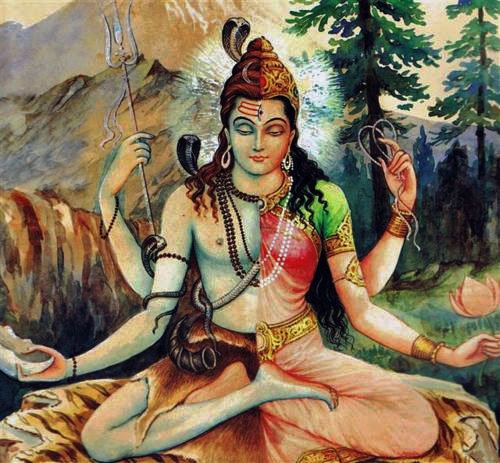
Through her devotion and austerities, Parvati attained the supreme blessing of becoming one with Siva, represented in the divine form of Ardhanareesvara—the Lord whose form is half male and half female.
This episode celebrates the inseparability of Siva and Sakti and the spiritual significance of devotion, penance, and divine grace.
Before coming to Arunachala, Parvati had undertaken penance at Kanchipuram. From there, she was directed to proceed to the sacred Hill and seek the guidance of Sage Gautama, who would explain its greatness and the spiritual significance of performing austerities there. Her arrival at Gautama’s hermitage is described with great reverence, and the sage receives her with profound devotion, recognizing her divine nature.
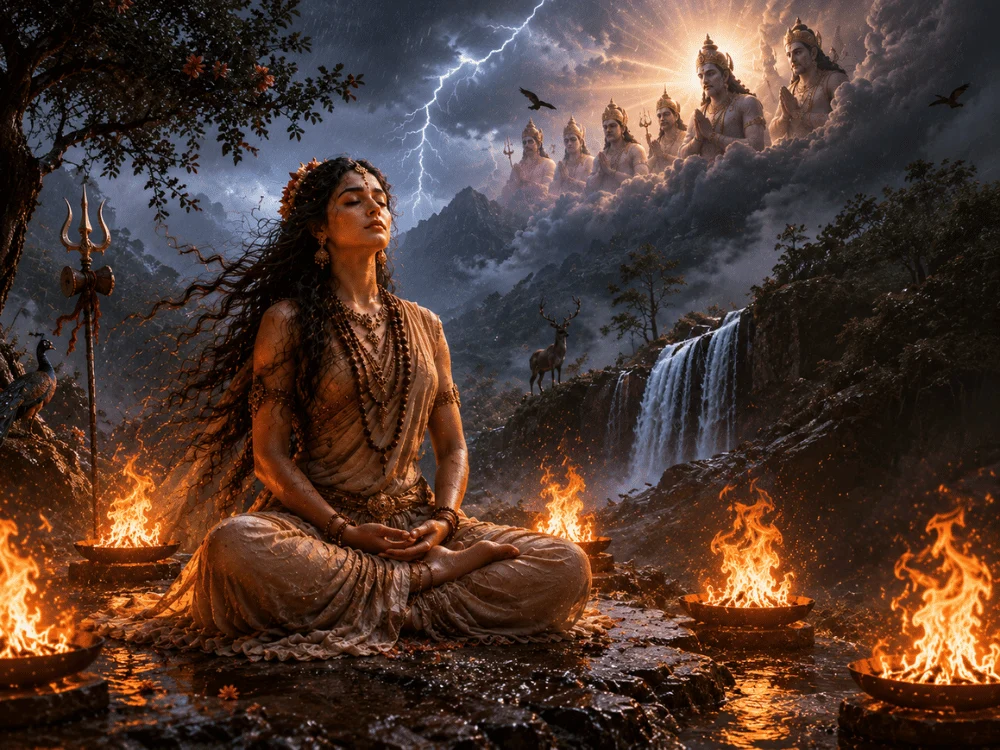
Sage Gautama then recounts the sacred greatness of Arunachala and explains the spiritual power associated with the Hill. Parvati listens to his account and undertakes her penance in its presence. This part of the narrative is especially significant because it connects her personal spiritual quest with the ancient traditions surrounding Arunachala.
The Puranam also relates further events during Parvati’s stay at Arunachala, including the destruction of the demon Mahisha by Durga and the subsequent episode involving a sacred symbol of Siva. These events form part of the account of Parvati’s penance and the purification associated with it, leading ultimately to the fulfilment of her aspiration.
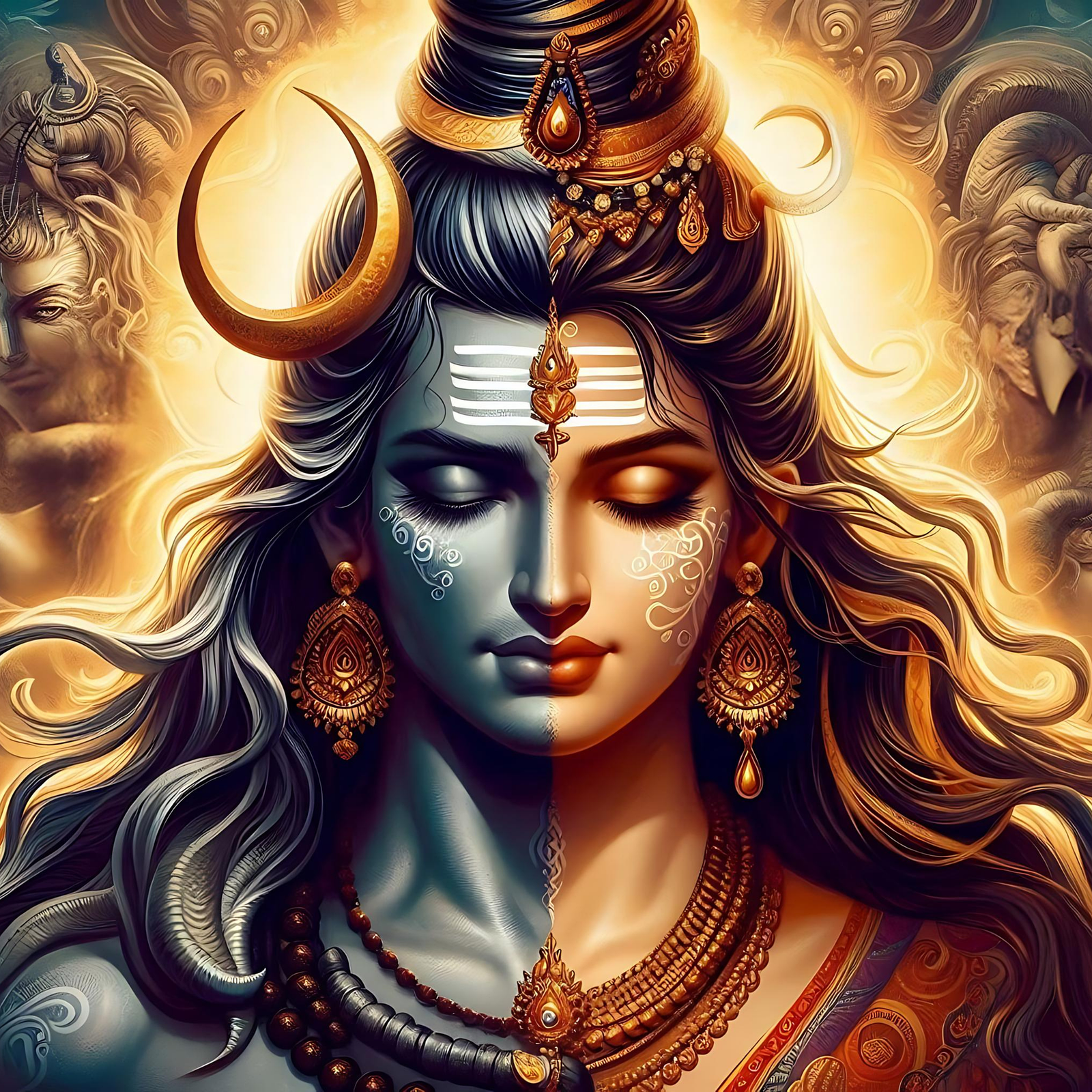
At the culmination of her austerities and devotion, Siva appears before Parvati and grants her the boon she seeks: to become one with him as the left half of his divine form. Their union as Ardhanareesvara expresses the inseparable nature of Siva and Shakti. The Puranam thus presents their union not merely as a divine event, but as a revelation of the underlying oneness of the two principles.
The Sacred Kings of Arunachala
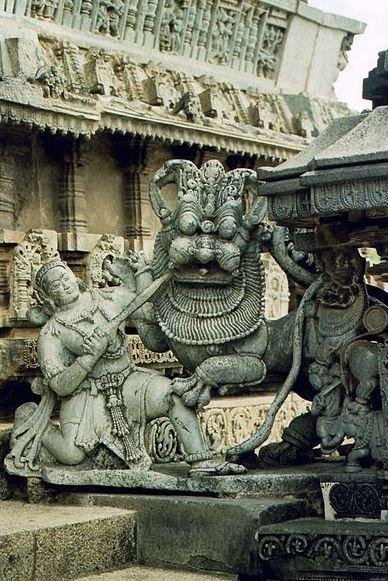
The Puranam also preserves stories concerning kings who were closely associated with Tiruvannamalai. Among them are the accounts of Vajrangada Pandya and Vallala Maharaja. These narratives describe the relationship between the rulers, their devotion to Lord Arunachaleswara, and the divine grace bestowed upon them.
The story of Vallala Maharaja is particularly significant in the local tradition of Tiruvannamalai. His devotion and relationship with Lord Siva are remembered as part of the sacred heritage of the town.The Puranam devotes a separate chapter to his story, describing his devotion to Lord Arunachaleswara and his longing for a son. The account relates how Siva intervenes and grants the king’s heartfelt wish, making this story an expression of divine compassion and grace.
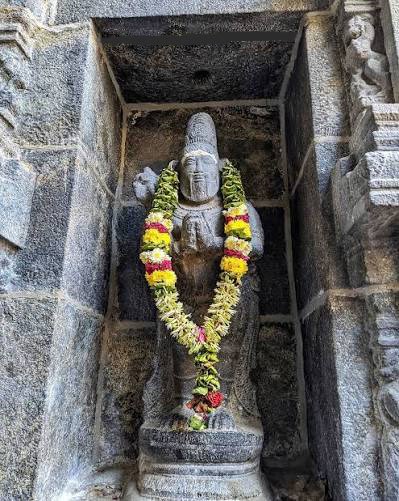
Through these accounts, the Puranam portrays Arunachala not only as a place of divine manifestation but also as a centre of devotion and spiritual transformation.
The story of Vajrangada Pandya is closely connected with the spiritual power of circumambulating Arunachala. According to the traditional account, the king was informed of his former identity as Indra, the ruler of the gods. Seeking to regain that position, he undertook the worship of Arunachala and circumambulated the Hill three times each day. Through this sustained devotion, his understanding gradually matured, and his desire for worldly power gave way to a deeper spiritual aspiration.
The story illustrates how devotion to Arunachala can transform the aspirations of a devotee. What begins as a desire for a particular blessing can, through continued worship and the grace of the Lord, lead to a higher understanding. The account also emphasizes the special importance of Giripradakshina, which is celebrated throughout the Puranic tradition as an act of devotion to the sacred Hill.
The Sacred Hill and Its Worship
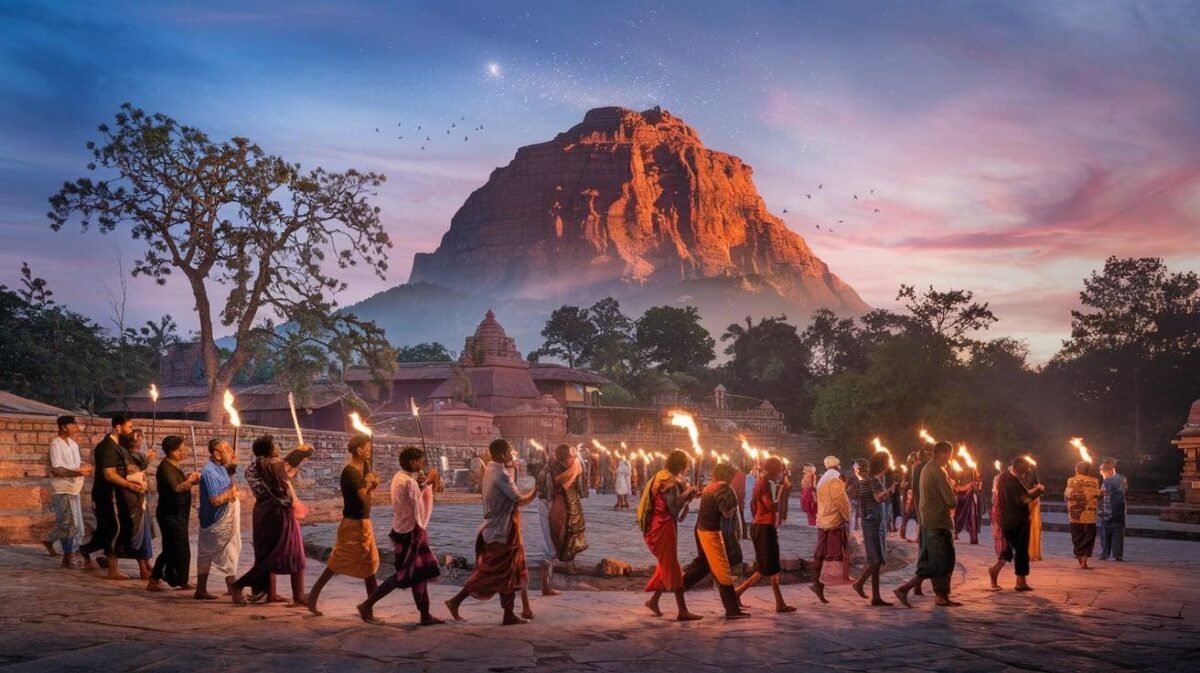
The Arunachala Puranam also describes the sacred geography of Tiruvannamalai, including its temples, holy water bodies, and places associated with the divine stories.
Particular importance is given to the worship of Arunachala through circumambulation, known as Giripradakshina. Walking around the Hill in reverence is regarded as a sacred act of worship, expressing devotion to Siva in His form as Arunachala.
The work thus preserves many aspects of the religious and spiritual traditions surrounding the Hill, presenting them as part of its enduring sanctity.
The sacred landscape surrounding Arunachala includes numerous temples, shrines, and tirthams (holy water bodies), each associated with religious traditions and legends. These places form an important part of the devotional heritage of Tiruvannamalai. The sacred geography is not limited to the Hill itself but extends to the surrounding landscape, where generations of devotees have worshipped and performed acts of religious observance.
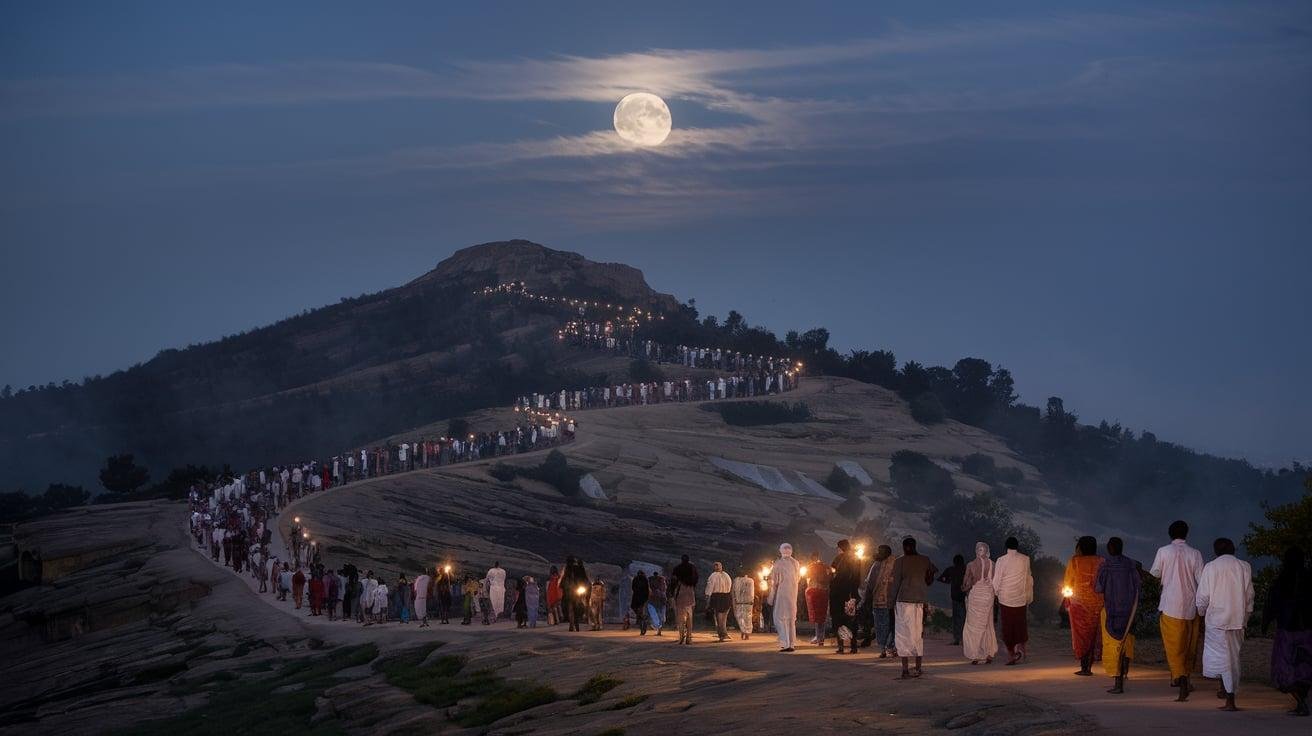
Among the various forms of worship associated with Arunachala, Giripradakshina holds a particularly important place. The traditional circuit is approximately fourteen kilometres long and is performed in a clockwise direction, keeping the Hill to one’s right. Along the route, devotees encounter ancient temples, shrines, Lingams, and sacred water bodies, making the circumambulation both a physical pilgrimage and an opportunity for prayer and contemplation.
The Arunachala Puranam gives special importance to this practice and describes its spiritual benefits. In a passage preserved in the account of Giripradakshina, its significance is explained through the symbolic meaning of the word Pradakshina: the removal of sins, fulfilment of worthy desires, freedom from future births, and ultimately liberation through spiritual knowledge. This reflects the traditional understanding of circumambulation as an act of worship that can lead the devotee towards spiritual fulfilment.
The worship of Arunachala is also closely associated with the great temple of Arunachaleswara, situated at the foot of the Hill. The temple and the Hill are regarded as inseparable in the local religious tradition: the Lord worshipped within the temple is revered in the very form of the sacred mountain. This relationship is particularly evident during the Karthigai Deepam festival, when the sacred flame is lit both in the temple and on the summit of Arunachala.
Sri Ramana Maharshi and the Arunachala Puranam
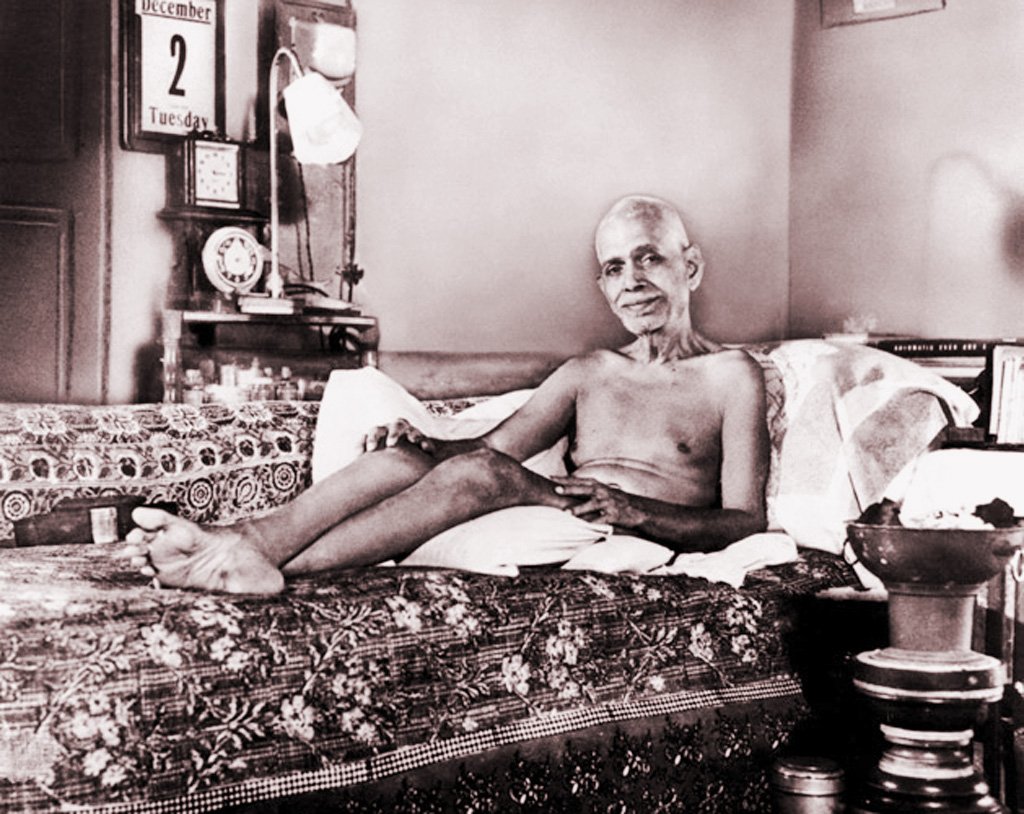
The Arunachala Puranam has a special place in the life of Sri Ramana Maharshi. Bhagavan frequently referred to the sacred greatness of Arunachala and was deeply moved by accounts of its divine presence.
A particularly touching incident is recorded by Devaraja Mudaliar in Day by Day with Bhagavan, dated 12 December 1945.
For devotees, the Deepam is more than a festival spectacle. It symbolises the eternal light of consciousness, which is beyond the limitations of form and understanding. The flame on the Hill serves as a reminder of the infinite light that is the true nature of the Self.
On that occasion, Bhagavan was reading aloud from the Tamil Arunachala Puranam. The passage described how Gauri (Parvati), after passing through the streets of Arunachala, reached the hermitage of the sage Gautama. When Bhagavan came to the verses describing Gautama’s joy at her arrival, he became so overcome with emotion that tears filled his eyes and he was unable to continue reading. He then laid the book aside.
This incident offers a glimpse of Bhagavan’s profound devotional feeling towards Arunachala and the sacred traditions associated with it. The Hill was not merely an object of religious reverence to him; it was the very embodiment of the Divine, to which his heart had been drawn from his earliest years.
The incident was not an isolated expression of Bhagavan’s devotional feeling. Devaraja Mudaliar observed that Bhagavan was sometimes unable to continue reading deeply devotional passages from Tamil works such as the Tevaram and the hymns of Thayumanavar. Their devotional beauty moved him so deeply that emotion would often overcome his voice.
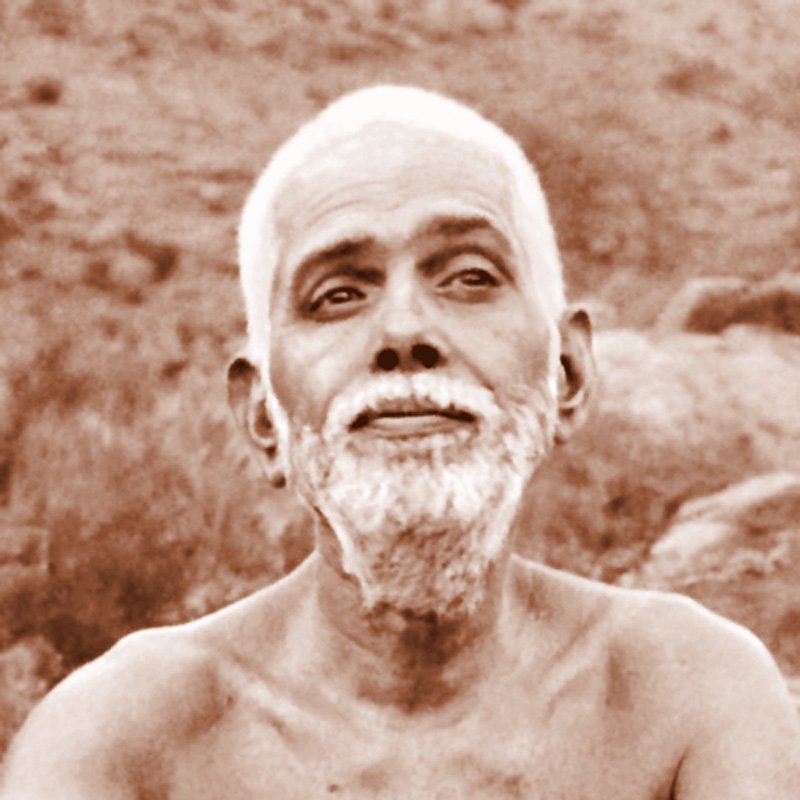
After Bhagavan had laid the Arunachala Puranam aside, Mudaliar himself took up the book and referred to the passage that had moved Bhagavan so profoundly. Bhagavan then remarked that he wondered how those who publicly recited and explained such devotional passages could do so without becoming similarly overcome with emotion. This further reveals the depth of feeling with which he experienced the sacred poetry.
The episode is especially meaningful because the passage that moved Bhagavan described Gauri’s arrival at the hermitage of Sage Gautama. It was not simply the beauty of the poetry that affected him, but the sacred account of the Divine Mother coming to Arunachala. His response offers a glimpse of the profound love and reverence with which he regarded the Hill and its sacred history.
The Enduring Significance of the Puranam
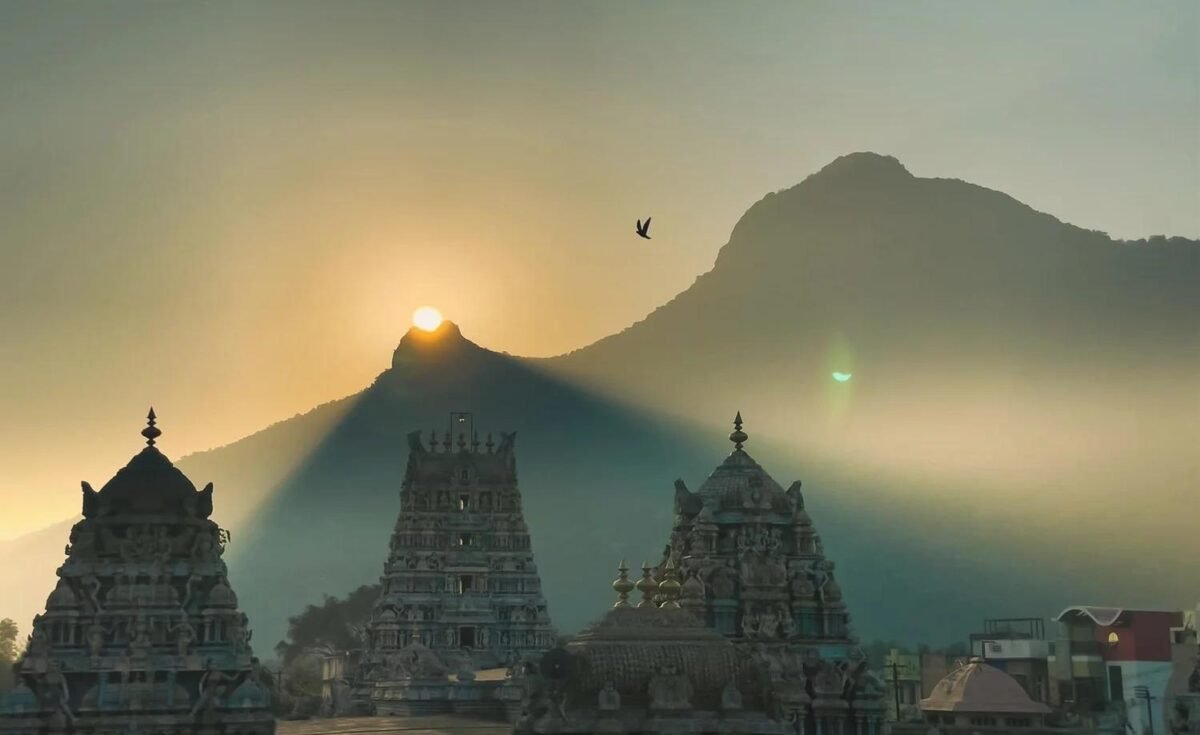
The Arunachala Puranam preserves the devotional and mythological traditions that have surrounded Arunachala for generations. Through its stories of Siva, Parvati, sages, and kings, it conveys the sacred significance of the Hill and the spiritual heritage of Tiruvannamalai.
For devotees of Sri Ramana Maharshi, the work has an added importance. It helps readers appreciate the deep connection between Bhagavan and Arunachala, and understand why the Hill occupied such a central place in his life and teachings.
The sacred stories may be approached as Puranic traditions, but their central message is one of devotion to the Divine and the transformative power attributed to Arunachala.
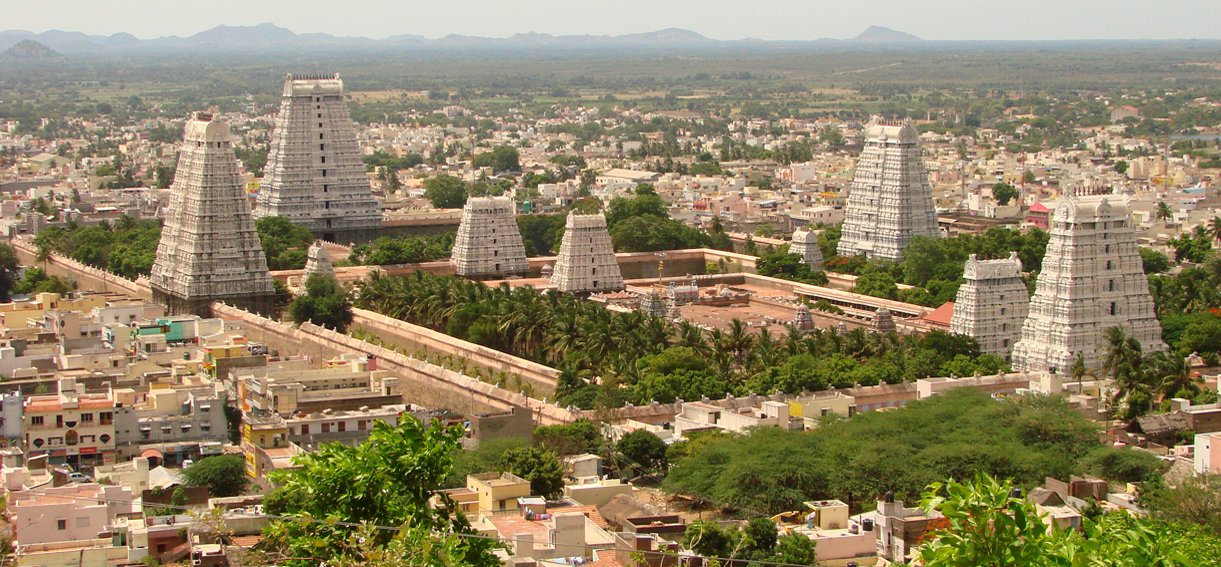
The Arunachala Puranam is also valuable as a record of the traditions, beliefs, and sacred associations that have shaped the identity of Tiruvannamalai. Its accounts of the manifestation of Siva, the penance of Parvati, the devotion of kings, and the sanctity of the Hill bring together different aspects of the religious heritage of this ancient pilgrimage centre. Through its poetic narration, the work has helped preserve these traditions for successive generations.
The importance of the Puranam is further reflected in the reverence with which Sri Ramana Maharshi regarded it. He frequently referred to its sacred accounts, and the incident recorded by Devaraja Mudaliar in December 1945 reveals how deeply its verses could move him. His response reminds us that these stories were not merely accounts of a distant past, but expressions of a living devotion to Arunachala.
For those who approach Arunachala through Bhagavan’s teachings, the Puranam offers an opportunity to appreciate the sacred traditions surrounding the Hill and the depth of his own relationship with it. Its stories invite readers to look beyond the outward form of the mountain and reflect upon the divine reality it represents. In this way, the Arunachala Puranam continues to hold a meaningful place in the devotional and spiritual heritage of Arunachala.
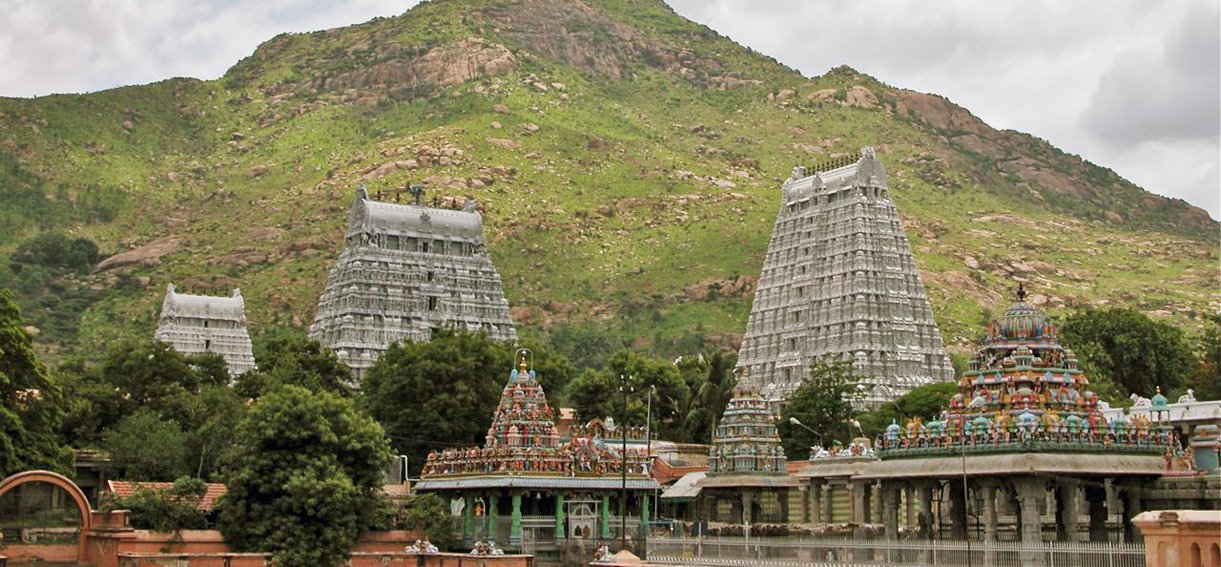
Arunachala is the Hill of Wisdom, the Sacred form of Siva, and the Silent reminder of the Eternal Self.
Om Sri Arunachaleswaraya Namah! 🙏
Further Reading
* Sri Ramanasramam – Arunachala Puranam
* An Introduction to the Arunachala Purana – The Mountain Path